Roofing Tear-Off Dumpster Sizing Guide for Johnson City
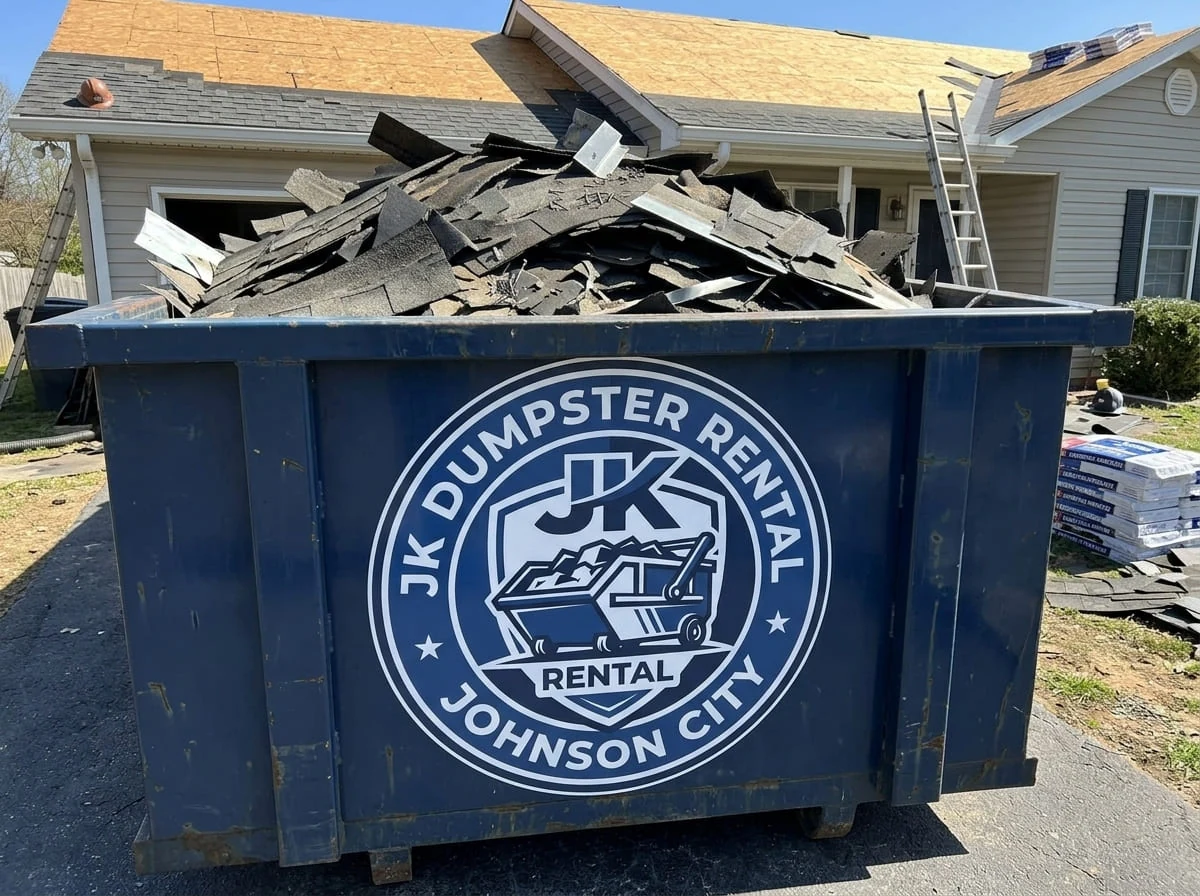
Shingles are dense, and weight — not volume — is what actually limits a roofing dumpster. Here's how to size a tear-off correctly the first time.
ReadJohnson City, TN guide
Tennessee's landfill rules are narrower and more specific than people expect. Here's what's actually banned from a dumpster load in Johnson City and Washington County, regulated by TDEC, with exact statute citations.
The Tennessee Department of Environment and Conservation — TDEC — regulates solid waste statewide through its Division of Solid Waste Management. TDEC is the correct, current agency to reference for anything landfill- or solid-waste-related in Tennessee, and it's the agency behind the permits, rules and waste-tire program described below.
Tennessee's solid waste framework sits in Tenn. Code Ann. Title 68, Chapter 211 — "Solid Waste Disposal" — which includes the Tennessee Solid Waste Disposal Act (Part 1), the Tennessee Solid Waste Planning and Recovery Act (Part 6), and the Solid Waste Management Act of 1991 (Part 8), among other parts covering permitting and prohibited acts. Implementing regulations sit in the Tennessee Compiled Rules & Regulations, Chapter 0400-11-01, "Solid Waste Disposal Control System."
Tennessee's clearest, most directly citable landfill-ban statute covers whole waste tires, lead-acid batteries and used oil: Tenn. Code Ann. Sec.68-211-866(a) bars a landfill or incinerator operator from knowingly accepting any of the three for disposal. Related statutes back this up — Sec.68-211-867 covers the waste-tire disposal program TDEC administers, and the older Sec.68-211-608 separately addresses automobile and lead-acid batteries specifically. If your project turns up old tires or a car battery, plan to route them separately rather than tossing them in with general debris.
Here's a point worth getting right: Tennessee does not have its own statutory landfill ban on major appliances — refrigerators, freezers, window air conditioners and similar "white goods." What actually governs appliance disposal is federal law: Clean Air Act Section 608, which requires refrigerant recovery before an appliance containing refrigerant is disposed of or recycled, applies in Tennessee the same as everywhere else in the country. In practice, Tennessee landfills and haulers commonly require refrigerant evacuation and certification before they'll accept an old refrigerator or AC unit — but that's a facility-level practice built around the federal rule, not a distinct Tennessee statute. If you're not sure what an old appliance needs before it can go out, ask us when you book.
Tennessee also does not have a comprehensive statewide e-waste landfill ban or mandatory manufacturer takeback law. Old TVs, computers and other electronics aren't barred from a Tennessee landfill by state statute the way they are in some other states — TDEC's own consumer guidance leans on voluntary recycling best practices rather than a mandatory disposal ban. That said, electronics recycling is still the smarter call environmentally, and plenty of local drop-off options exist — it's simply a best-practice matter here, not a legal mandate.
The operating landfill serving Johnson City is the Iris Glen Environmental Center at 1705 E. Main St., operated by Waste Management, with a long operating history and a landfill-gas-to-energy component. The City of Johnson City's own Solid Waste Services Complex sits at 91 New St. and handles routine city guidance — paint has to be solidified before curbside disposal, building materials and carpet aren't accepted in routine collection and need to go through the convenience-center system, and bulky items like furniture or appliances require a scheduled pickup call rather than routine curbside pickup. Washington County residents outside city collection are served by a network of staffed convenience centers.
Tires, lead-acid batteries and used oil don't belong in a roll-off dumpster load bound for the landfill — that part is a real legal requirement. Appliances need refrigerant handled first. Electronics are a should-recycle, not a must-recycle-by-law, in Tennessee. If your project involves clearing out any of these, mention it when you book so we can help you plan for it rather than finding it mixed into a load after the fact.
| Size | Dimensions | Capacity | Weight included | Best for |
|---|---|---|---|---|
| 10 Yard Dumpster | 14 ft long × 7.5 ft wide × 3.5 ft high | 50–70 bags | 1–2 tons | Small cleanouts, roofing shingles, tight driveways. |
| 15 Yard Dumpster | 16 ft long × 7.5 ft wide × 4.5 ft high | 80–100 bags | 2–3 tons | Flooring, bathroom or kitchen updates, multi-room cleanouts. |
| 20 Yard Dumpster | 22 ft long × 7.5 ft wide × 4.5 ft high | 110–130 bags | 3–4 tons | Medium remodels, roofing jobs, light construction. |
| 30 Yard Dumpster | 22 ft long × 7.5 ft wide × 6 ft high | 170–190 bags | 4–5 tons | Whole-home projects, office cleanouts. |
| 40 Yard Dumpster | 22 ft long × 7.5 ft wide × 8 ft high | 230–250 bags | 5–6 tons | Large builds, commercial or industrial jobs. |
Call (423) 740-6063 and tell us what you're clearing. We'll help you sort out what belongs in the dumpster and what needs a separate disposal path under Tennessee's rules.
Talk to a real person
Call and describe the job. Flat-rate pricing, a sized container, and a delivery time on the same call.
Mon–Sat 7:00am – 7:00pm
From this guide
The Tennessee Department of Environment and Conservation (TDEC) regulates solid waste statewide, under Tenn. Code Ann. Title 68, Chapter 211, with implementing regulations at Tenn. Comp. R. & Regs. 0400-11-01.
No — Tenn. Code Ann. Sec.68-211-866(a) bars landfills from knowingly accepting whole waste tires, lead-acid batteries or used oil. Route those separately.
Not by a Tennessee statute. Appliance disposal is governed by federal Clean Air Act Section 608, which requires refrigerant recovery first — Tennessee facilities commonly require that as a practical matter, but there's no state-specific landfill-ban law for appliances.
No — Tennessee does not have a comprehensive statewide e-waste landfill ban or mandatory takeback law. Recycling electronics is still the better practice, just not a state legal requirement here.
Keep reading
Shingles are dense, and weight — not volume — is what actually limits a roofing dumpster. Here's how to size a tear-off correctly the first time.
ReadThe Tweetsie Trail follows one of Johnson City's real old rail corridors, and the neighborhoods along it carry some of the city's older housing stock. Here's what renovation and cleanup looks like in the area.
ReadJohnson City is named for a local merchant, not a president — and its state charter has an exact, well-documented date. Here's the real founding history, hedges and all.
Read